

Last Updated on: Feb 10, 2025
Small businesses often face cash flow hiccups and surprise expenses. In fact, 56% of business owners who seek financing do so to cover operating costs, and over half struggle with uneven cash flow. A business line of credit can be a lifesaver in these situations. It gives you a revolving credit limit you can tap into as needed – you borrow what you need (up to the limit), pay interest only on what you use, then repay and reuse the funds. It’s like a safety net of extra capital for your business.
After researching dozens of lenders – comparing interest rates, credit limits, qualifications, and repayment terms – we’ve identified five of the best business lines of credit for 2025. Whether you need to smooth out cash flow, purchase inventory, cover payroll, or jump on a time-sensitive opportunity, these options offer flexible funding on your terms. Below we’ll break down our top picks (and why we chose them), then answer common questions about how business lines of credit work and how to choose the right one.




What We'll Cover
- Our Top Picks at a Glance
- Lendio – Best Overall Business Line of Credit
- Backd – Best for Flexible Repayment
- Bluevine – Best for Low Rates
- OnDeck – Best for Repeat Borrowers
- Funding Circle – Best for Established Businesses
- Other Notable Options and Alternatives
- Kabbage (by American Express) – Best for monthly payments
- Traditional Banks – Best for very qualified businesses
- Personal Line of Credit – Best for brand-new businesses
- Conclusion & Key Takeaways
- Business Line of Credit FAQ
Our Top Picks at a Glance
Here’s a quick comparison of the best business line of credit options for small businesses in 2025:
| Lender | Credit Line Range | Starting Rates | Min. Credit Score | Best For |
|---|---|---|---|---|
| Lendio (Marketplace) | $1,000 – $500,000 | Varies (competitive offers) | 560 | Overall flexibility (multiple lenders) |
| Backd | $25,000 – $750,000 | Not disclosed (short terms) | 640 | Flexible repayment & fast funding |
| Bluevine | $5,000 – $250,000 | ~7.8% APR (best qualified) | 600–625 (approx.) | Low interest rates |
| OnDeck | $6,000 – $100,000 | ~40–60% APR (average) | 600 | Repeat borrowing perks |
| Funding Circle | $10,000 – $100,000 | ~10.99% APR (starting) | 660 | Established businesses (low rates) |
Data is based on lender disclosures and market info as of late 2024–2025. Always check with the lender for up-to-date terms.
Below, we dive into more detail on each of these top options, including their pros and cons.

Lendio – Best Overall Business Line of Credit
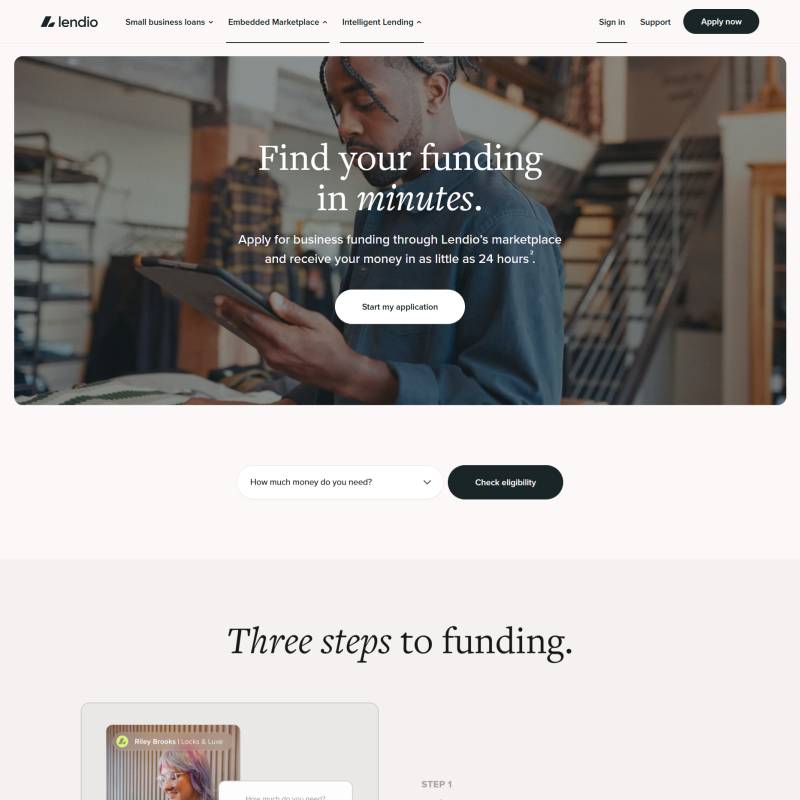
Lendio is our top overall choice because it’s not a direct lender at all – it’s a lending marketplace. Through one simple application, Lendio can match you with offers from 75+ different lenders in its network. This broad reach greatly improves your chances of finding a line of credit that fits your needs.
- How it works: You fill out a free online application (which takes only minutes). Lendio then presents you with loan or line of credit offers you qualify for across its partner network. You can compare rates, fees, and terms and choose the best offer.
- Why we like it: Lendio’s platform often results in larger credit limits and competitive rates because lenders compete for your business. It’s especially useful if you’re not sure where you’ll get the best deal – Lendio lets you “shop around” without multiple applications. The process is fast and there’s personalized guidance available if you need help understanding offers.
- One application, many lenders: Access a wide variety of funding offers in one place (Lendio works with 75+ lending partners)
- Fast and easy process: The online application is quick (often ~15 minutes) and won’t impact your credit just to get quotes
- Flexible options: Because it’s a marketplace, you may find both large lines (up to $500k) and smaller lines, with varying interest rates to choose the best fit
- Interest rates vary: Lendio’s partners include some higher-interest online lenders, so less-qualified borrowers might get steep rates on their offers. Always review the terms carefully
- Potential hard inquiry: While checking offers is soft credit pull, accepting an offer may result in a hard credit inquiry by the actual lender (which could briefly affect your credit score). Some users report hard pulls from certain Lendio partners
In short, Lendio is an excellent first stop for most small businesses. Its breadth of options and borrower-friendly process make it likely you’ll find a suitable business line of credit on its platform. For many entrepreneurs, that efficiency and choice make Lendio the best overall.
Backd – Best for Flexible Repayment
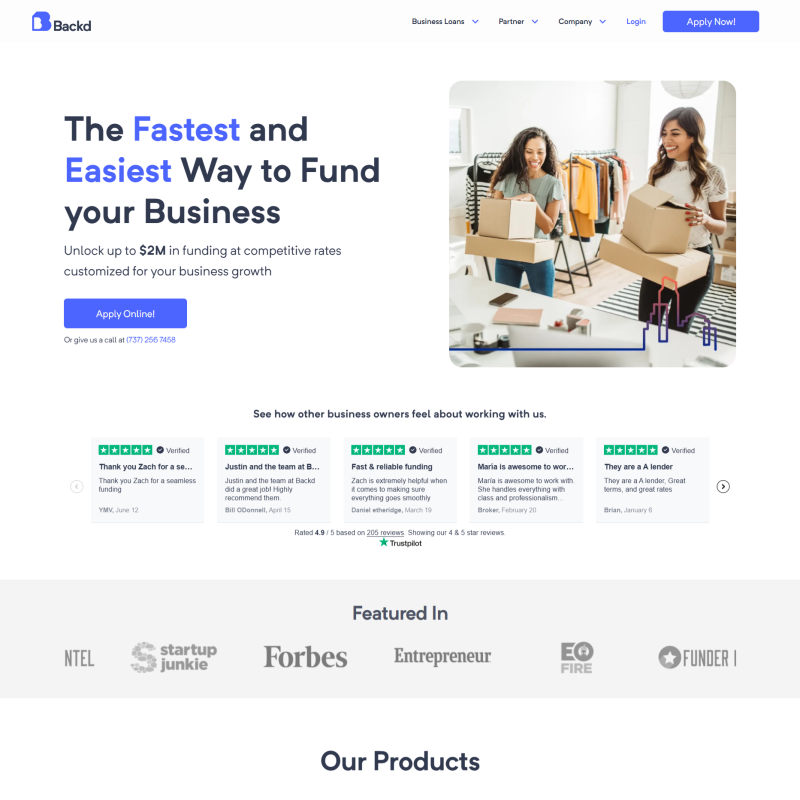
If you value flexibility in how you repay your line of credit (and need funds fast), Backd is a standout. Backd is an online lender that offers large credit lines (up to $750,000) with an unusual twist: short-term repayment periods of 6 or 12 months that automatically renew as you pay down your balance. Essentially, your credit line “reloads” without requiring a new loan each time – perfect for ongoing working capital needs.
- What makes it flexible: Most online lenders require fixed weekly payments. Backd’s line of credit is also repaid on a weekly basis over 6 or 12 months, but once you’ve paid off what you borrowed, your full credit limit becomes available again for the next draw (within your draw period). There’s no need to reapply or speak to an agent to reuse your credit line – it’s truly revolving. This setup can help if you have unpredictable cash flow, because you can borrow and repay on a schedule that suits your business needs.
- Speed to funding: Backd shines in speed. The application is fully online and automated, with decisions often coming within minutes, and funding within 24 hours of approval. This near-instant turnaround is one of the fastest in the industry. If you need money right now, Backd could have it in your bank account by the next business day.
- Near-instant approval: Backd’s system can give you an answer in minutes, so you’re not left waiting long (and funds arrive as soon as the next business day)
- Flexible, revolving use: 6–12 month term automatically renews as you repay, so your credit line replenishes without reapplying. Great for ongoing needs
- Large credit limits: Offers lines up to $750k, which is higher than many online competitors – helpful if you need a big cash buffer
- Opaque rates: Backd isn’t very transparent about its interest rates or fees publicly. Some reports suggest factor-rate pricing around a 30% APR equivalent, but you won’t know your cost until you apply
- Industry restrictions: Backd will not fund certain industries (for example, financial services, real estate, nonprofits, cannabis-related businesses, and others). Even if you qualify financially, your industry might make you ineligible
- Short repayment term: The maximum 12-month term means higher periodic payments (compared to a 2-3 year term elsewhere). This could strain cash flow if you borrow a large amount, since you must repay relatively quickly
Overall, Backd is ideal for businesses that need money fast and can handle repaying on a short timeline. Its flexible, auto-reloading credit line is very convenient for managing cash flow ups and downs. Just be mindful of the potential cost and check that your industry is eligible before you apply.
Bluevine – Best for Low Rates
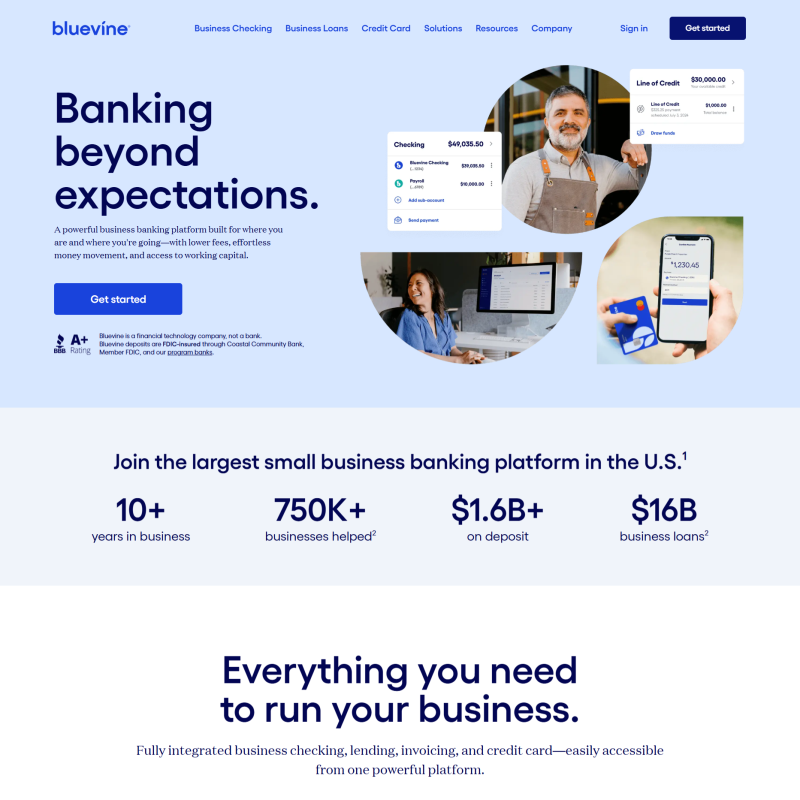
Bluevine is an excellent choice if your top priority is getting a low interest rate. This online lender’s business line of credit is known for having some of the lowest starting rates in the market – as low as 7.8% interest for the most qualified borrowers. That’s comparable to (or even below) many traditional bank credit lines.
- Why it’s affordable: Bluevine can offer low rates partly because it targets relatively strong borrowers. You’ll need at least 6+ months in business, a 600+ credit score, and at least $10,000 in monthly revenue (about $120k/year) to qualify for any line. To get those prime rates, your credentials likely need to be even higher (solid credit, higher revenues). In short, Bluevine rewards established businesses with good financials by giving them bank-like rates in a convenient online package.
- Other perks: Bluevine’s lines go up to $250,000 and funds can be accessed very quickly – often same-day or next-day once you draw. Uniquely, Bluevine also offers monthly repayment plans on certain credit lines (most online lenders require weekly payments). A monthly payment schedule can significantly help your cash flow management. Bluevine also reports to business credit bureaus, so using their line responsibly can help build your business credit profile over time.
- Low starting interest: Qualified customers can get rates starting around 4.8%–7.8% (simple interest), making Bluevine one of the cheapest LOCs among online lenders
- Fast access to cash: Once approved, you can typically get your money within hours (Bluevine can deliver funds as fast as same day in some cases). Great for urgent needs
- Monthly payments available: Unlike many competitors, Bluevine may allow monthly repayment on certain lines, which is easier on cash flow than weekly payments
- Higher qualifications: Bluevine’s low rates come with higher bars to clear. The minimum requirements – e.g. $10k in monthly revenue and fair/good credit – are stricter than some rivals. Newer or smaller businesses might not qualify
- Potential fees: Watch for fees such as draw fees (Bluevine historically charged a small fee per withdrawal) or inactivity fees. The cost is still reasonable given the low interest, but fees can add up if you’re not aware. Always review the fee schedule
- Credit line cap: The maximum line amount is $250,000. While sufficient for most small businesses, it’s lower than some options (Backd or certain banks) if you anticipate needing more than a quarter million in credit
In summary, Bluevine is the go-to for affordable rates on a business line of credit – if your business has the credentials to qualify. It blends bank-like pricing with the speed and simplicity of an online lender. For those who meet the requirements, Bluevine’s LOC can provide low-cost, on-demand financing to cover working capital needs.
OnDeck – Best for Repeat Borrowers
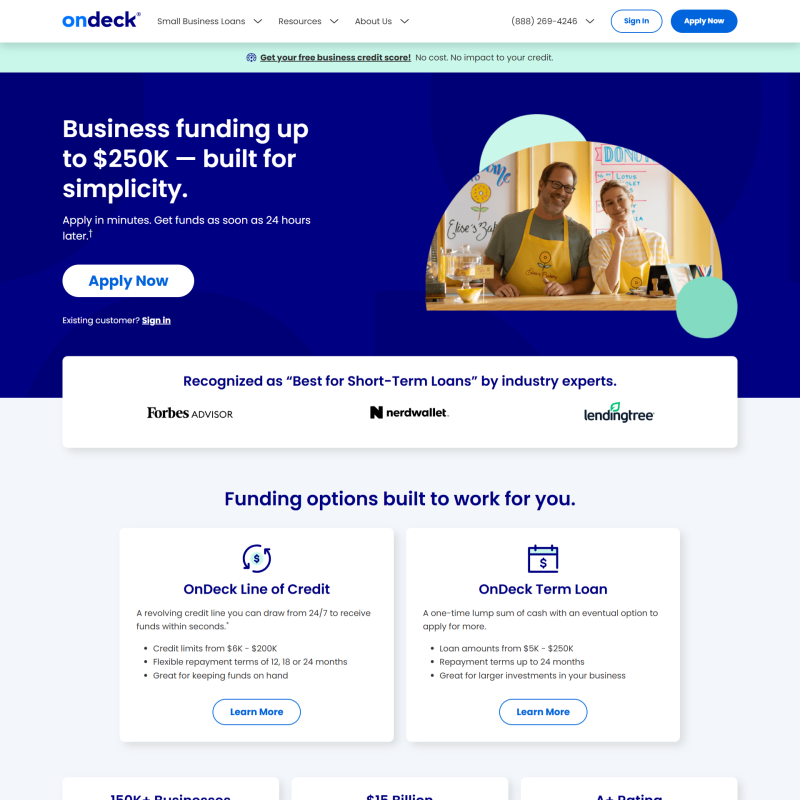
OnDeck is a well-known online small business lender, and it makes our list for its unique benefits to repeat customers. While OnDeck’s line of credit isn’t the cheapest (in fact, its APRs tend to be on the higher side), the company offers loyalty perks: if you keep borrowing with OnDeck, you can earn discounted rates and fees on future financing.
- Why repeat borrowing matters: Many small businesses use multiple financing products over the years – you might start with a line of credit, later take a term loan, etc. OnDeck positions itself to be your long-term partner. For example, returning OnDeck customers may get a percentage point or two knocked off their interest rates, or 50% off origination fees on a new loan, as a reward for loyalty. These savings can be significant if you anticipate needing financing repeatedly.
- The trade-off: OnDeck’s current rates start relatively high – often in the 30%–40% APR range for a line of credit. In fact, OnDeck reports that its average line of credit APR is about 56.6% (for the half-year ending June 2025), which highlights that this product can be expensive for many borrowers. However, if you borrow, repay, and come back for more, those loyalty discounts could ease the cost on subsequent rounds. Essentially, the first credit line might not have a stellar rate, but your second or third financing with OnDeck could be much better thanks to your established relationship.
- Loyalty discounts: OnDeck offers reduced rates and fees to repeat borrowers. If you plan to use financing frequently, these loyalty perks can lower your overall cost over time
- Builds business credit: OnDeck reports your repayment history to business credit bureaus. Responsible use can help improve your business credit score, potentially leading to better terms in the future
- Fast funding: Like other online lenders, OnDeck can approve applications quickly and provide funding as soon as the same day. When you need cash in a hurry, OnDeck delivers
- High starting APR: The interest rates are relatively high to begin with. Even well-qualified borrowers might see double-digit or high teens APR offers; less-qualified borrowers could see extremely high rates (the average LOC customer pays ~56% APR). This is much higher than bank credit lines
- Strict minimum requirements: You’ll typically need at least 1 year in business and $100,000+ in annual revenue, plus a fair personal credit score (~600), to qualify. These criteria are a bit higher than some other online lenders (which may accept 6 months in business or lower revenue)
- Lower credit limit: OnDeck’s line of credit maxes out at $100,000. This is fine for many small businesses, but if you need a very large credit line, OnDeck might not cover it
Choose OnDeck if you value a long-term financing relationship and might borrow multiple times. The initial cost may be high, but the real benefit comes if you renew or expand your financing with OnDeck in the future. Many customers appreciate the VIP treatment repeat borrowers get. Just be sure your business can handle the interest costs of that first line of credit – and always compare offers to ensure you’re comfortable with the rates.
Funding Circle – Best for Established Businesses
Funding Circle is an established fintech lender (originating from the UK) that caters to more established, creditworthy businesses. We recommend Funding Circle’s business line of credit for companies that can meet its stricter qualifications – because doing so unlocks some great perks, like competitive APRs and excellent service.
- Who it’s for: Funding Circle typically requires at least 2 years in business and a good personal credit score (around 660+) to qualify. It also prefers solid financials (while a specific revenue minimum isn’t always listed, expect to need strong revenue and cash flow). In short, this is not a product for startups or very small operations; it’s geared toward stable, mature small businesses.
- Why Funding Circle stands out: In exchange for those higher requirements, Funding Circle can offer rates starting around 10.99% APR – much lower than most alternative lenders and closer to bank loan rates. It also boasts a quick turnaround (often funding within 1–3 days after approval) and transparent terms. Additionally, if you ever need other financing, Funding Circle offers term loans and SBA loans through its platform, so it can be a one-stop shop as your financing needs grow. Customer reviews often praise Funding Circle for its professional service and no-nonsense fee structure.
- Competitive interest rates: For those who qualify, Funding Circle’s starting APR (~11%) is among the lowest for online lenders, making the cost of borrowing much more affordable than typical short-term lenders
- Fast funding: Despite bank-like rates, the process is still relatively quick – you might get funded in 48 hours after approval, helping you seize opportunities without the delays of a traditional bank loan
- Monthly repayments: In some cases, Funding Circle offers monthly payment schedules on its lines of credit, which, like Bluevine, can help manage cash flow better than weekly payments
- High borrower requirements: Funding Circle is picky. Needing 2+ years in business and a strong credit score (plus solid financials) means many newer or smaller businesses won’t qualify. It’s really aimed at established businesses with decent credit profiles
- Relatively modest credit limits: The maximum line amount is around $100,000 for Funding Circle’s LOC. If you need more than that, you might have to seek a larger loan elsewhere (Funding Circle’s own term loans go higher, but its credit line product doesn’t)
- Personal guarantee and collateral: Funding Circle (like most lenders) will usually require a personal guarantee, and it may file a blanket lien on business assets. This isn’t unusual, but it does mean your personal assets and credit could be on the line despite the loan being “unsecured
- ”
In summary, if your business has the track record and credit to qualify for Funding Circle, it’s an excellent choice. You’ll get a low-APR line of credit with the convenience of online lending and the confidence of working with a reputable lender. It’s best for established businesses that want a fair-priced credit line without dealing with a big bank.

Other Notable Options and Alternatives
The above five lenders are our top picks, but they’re not the only ways to get a business line of credit. Here are a few honorable mentions and alternative paths to consider:
Kabbage (by American Express) – Best for monthly payments
Kabbage offers a true business line of credit (up to $150,000) but charges a monthly fee instead of a traditional interest rate. For example, it might charge a ~2% fee per month on the outstanding balance, and you pay it off in 6, 12, or 18 months. The big advantage is monthly repayment schedules, which many small businesses prefer over weekly. However, be careful: that fee structure can equate to a high APR if you take the full term to repay. Kabbage is a good option if you value simplicity and can repay quickly (to keep costs down). Note that Kabbage was acquired by American Express, so it’s backed by a major financial company. Minimum requirements are fairly lenient (no set credit score or revenue disclosed publicly, but generally at least 1 year in business).
Traditional Banks – Best for very qualified businesses
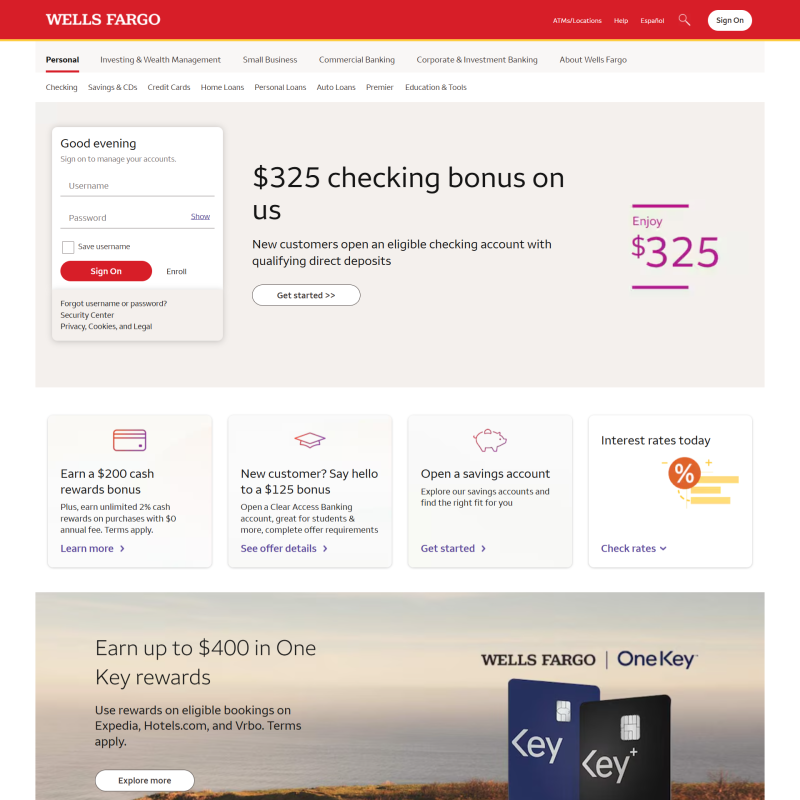
If your business is well-established (2+ years, strong finances) and you have good personal credit (often 700+), a bank line of credit might offer the lowest rates and highest limits. Big banks like Bank of America, Chase, Citi, and Wells Fargo all provide business lines of credit. For instance, Wells Fargo offers credit lines up to $500,000 with interest rates around Prime + 1.75%, which currently would be a very attractive rate. Banks may offer secured lines (requiring collateral) or unsecured ones. The downsides are slower application processes and stricter approval criteria – banks will scrutinize your financial statements and may take several weeks to approve. But if you qualify, you’ll get a stellar deal with low interest and long-term access. It’s worth checking with your business’s bank to see what they offer.
Personal Line of Credit – Best for brand-new businesses

If your business is too new or too small to qualify for a business LOC, one alternative is to apply for a personal line of credit based on your own creditworthiness. Many banks and credit unions offer personal lines of credit which you can then use for your business needs. These typically require strong personal credit (often a 670+ credit score). The benefit is that there are no business revenue or time-in-business requirements – approval is based on you, not your fledgling company. However, there are some caveats. Using personal credit for business can be risky; you’re 100% personally liable and it doesn’t build business credit. Some personal LOC agreements also prohibit using the funds for business purposes (check the terms). And personal lines can be smaller and sometimes carry higher interest than business lines if unsecured. In short: a personal line of credit might jump-start a new business, but be sure to weigh the risks and remember you’re on the hook personally. It’s often a temporary solution until your business qualifies for its own financing.
Lastly, don’t overlook SBA loans or other products if a line of credit isn’t the right fit. For example, an SBA CAPLines program is designed as a business LOC for certain uses, and other forms of small business loans (term loans, invoice financing, business credit cards) might serve your needs better depending on the situation.
Conclusion & Key Takeaways
Finding the best business line of credit comes down to matching a lender’s strengths with your business’s needs and qualifications. For most small businesses, Lendio’s marketplace is the best starting point – it casts a wide net, increasing your odds of getting a good credit line at a decent rate. If low interest is your main concern and you meet the requirements, Bluevine could offer one of the cheapest lines of credit out there. Need ultra-fast cash or very flexible terms? Backd might be your top pick. Planning to borrow repeatedly over time? OnDeck could reward your loyalty (just be wary of initial rates). And if you have an established, solid business, Funding Circle provides a bank-like credit line experience with fewer hassles.
In all cases, remember that a business line of credit is a tool for managing working capital – it’s best used for short-term needs, not long-term debt. You can borrow, repay, and borrow again, which gives you a lot of flexibility to handle surprises or opportunities. Just keep an eye on the interest and fees, and don’t be afraid to comparison shop (or negotiate) to get the best deal.
Ultimately, the right line of credit will provide your business with a safety net and growth capital when you need it, at a cost you can afford. With the information and options outlined above, you’re well on your way to making an informed decision and keeping your business financially agile in 2025 and beyond.
Next Steps: If you’re still unsure which way to go, consider reaching out to a small business financial advisor or exploring our guide to the best small business loans (for larger, one-time financing needs). With a bit of research and the right partner, you’ll secure the funding that keeps your business running smoothly.
Business Line of Credit FAQ
What is the average interest rate for a business line of credit?
Interest rates for business lines of credit vary widely based on the lender and your qualifications. Highly qualified borrowers with strong credit and financials might see starting rates in the single digits (around 5%–10% APR). For example, Bluevine advertises interest rates as low as 7.8% for top customers. However, smaller or riskier businesses will pay more – it’s not uncommon for APRs to land in the teens or twenties. In fact, one online lender (OnDeck) reports that the average APR on its business credit lines is about 56%, illustrating how expensive these lines can get for lower-credit borrowers. In general, expect something in the teens as an average, and always check the specific rate offered to you by a lender. If it seems high, it may be worth improving your credit profile or shopping around for a better rate.
What do you need to qualify for a business line of credit?
Qualification requirements differ by lender, but there are common benchmarks. Typically, you’ll need: a minimum personal credit score (often at least 560–600 for online lenders, and around 700 for banks), sufficient business revenue (e.g. $50k+ annual for many online lenders; banks may require more), and a minimum time in business (commonly 6 months to 2 years). For example, many lenders in Lendio’s network require at least 6 months in business and $10,000 in monthly revenue to even consider a line of credit offer. You should also expect to provide documentation during the application: things like business financial statements, bank account statements, tax returns (business and possibly personal), and basic info about your company (EIN, entity type, etc.). The stronger your business’s financials and credit, the easier it is to qualify and the larger line (and better rate) you’ll receive. Startups or owners with bad credit might need to seek alternatives (like a personal line of credit or a secured line with collateral) until they can meet these criteria.
How do I get a business line of credit?
To get a business line of credit, follow these general steps:
- Assess your qualifications: Check your personal credit score and gather key financial info about your business (annual revenue, profit/loss, etc.). This will help you target the right lenders.
- Research and choose a lender: Decide if you want to apply through a lending marketplace (like Lendio) to see multiple offers, go with a direct online lender, or try a traditional bank. Consider factors like speed, rates, and how much you need.
- Submit an application: Most online applications will ask for details about your business (industry, time in operation, revenues) and personal details for the owner. You’ll likely need to upload documents such as recent bank statements, tax returns, and perhaps a business plan or financial projections (especially for banks). Ensure all information is accurate and complete to avoid delays.
- Await approval and review terms: Many online lenders can approve you in a day or two (some even faster). Banks might take a few weeks. Once approved, carefully review the credit line agreement – note the credit limit, interest rate, fees, and repayment schedule. Don’t hesitate to ask questions.
- Accept and use the credit line: If you’re satisfied, sign the agreement. The lender will extend you the line of credit, often with an online dashboard or checks/card to draw funds. You can then draw money as needed up to your limit. Remember, you only pay interest on what you borrow, not the entire credit line. As you repay, those funds become available to borrow again.
Keep in mind that applying for a business line of credit may result in a hard credit inquiry (affecting your credit score slightly), so it’s wise to pre-qualify or compare options beforehand if possible. Once you have the line of credit, use it responsibly – make payments on time and avoid maxing it out – to maintain a good relationship with the lender and possibly qualify for credit line increases in the future.
What fees do lines of credit have?
Fees on business lines of credit can include a few different types, and they vary by lender. Common fees to watch for are:
- Origination or opening fee: a one-time fee to set up the line of credit. This covers the lender’s cost of processing your application and getting the account opened. Not all lenders charge this, but some do (it might be a flat fee or a percentage of your credit line).
- Maintenance or unused line fee: an ongoing fee for keeping the credit line available. Some lenders charge a monthly or annual fee whether or not you use the line. In some cases it’s called an “unused line fee” – effectively a small percentage charged on the unused portion of your credit limit, assessed periodicallye. This encourages borrowers to actually use the credit line rather than just have it as back-up.
- Draw fee: a fee charged each time you draw funds from the line. For example, a lender might charge $20 or 1% of the amount each time you withdraw from your credit line. Not all lenders have draw fees, but it’s fairly common among online lenders.
- Late payment fee: if you miss a payment or pay late, standard late fees will apply. This is just like any loan – avoid late payments not only to avoid fees but also to keep your credit in good shape.
- Annual fee: similar to a credit card, a few lenders might have an annual account fee. This is more common with banks. Often, this can be waived if you meet certain usage or balance criteria.
Always ask the lender for a full fee schedule up front. Reputable lenders will disclose all fees clearly. For example, if there’s an annual fee or maintenance fee, calculate that into your cost of borrowing. An unused line fee can surprise you if you open a line “just in case” and then find you’re being charged for not using it. By being aware of the fees, you can plan to utilize your credit line in the most cost-effective way.
Are business lines of credit unsecured?
Some are unsecured, and some are secured. A business line of credit can be structured either way. An unsecured line of credit means you are not pledging any specific collateral asset to guarantee the line. Most smaller business lines of credit (especially from online lenders) are unsecured in the sense that you don’t explicitly put up property or equipment as collateral. However, even unsecured business lines typically require a personal guarantee from the business owner (you promise to personally repay if the business can’t) and may include a general lien on business assets. This means if you default, the lender has a legal claim on your business’s assets overall, but not a particular asset.
On the other hand, secured business lines of credit require collateral – often in the form of business assets like inventory, accounts receivable, or even certificates of deposit. For example, a bank might give a larger credit line but secure it against your receivables or equipment. The benefit is that secured lines usually come with lower interest rates or higher credit limits because the lender’s risk is reduced. If you fail to repay, the lender can seize the specific collateral you pledged.
For most small businesses, unless you have collateral to offer, you’ll be pursuing an unsecured line of credit (again, backed only by your personal guarantee). Just be aware that “unsecured” doesn’t mean risk-free – if you default, it will impact your credit and the lender can still pursue legal action to collect (potentially putting both personal and business assets at risk). If you do have valuable assets and need a large credit line, looking into a secured line of credit (or even a home equity line of credit if you’re willing to use personal real estate) could be a way to secure more favorable terms. Always discuss collateral requirements and personal guarantee terms with your lender so you know exactly what secures your line of credit.
The responses below are not provided, commissioned, reviewed, approved, or otherwise endorsed by any financial entity or advertiser. It is not the advertiser’s responsibility to ensure all posts and/or questions are answered.



![Student Loan Relief & Forgiveness Programs by State [2023 Updates]](/assets/images/a7d15511dd5f23f8d39f4a65aaca256c.png)
I've been on a personal line of credit for my business and it was always a bit risky.
I had a terrible experience with Backd. The fast funding is great, but the lack of transparency on their rates is a huge red flag.
This article is a lifesaver.